Uncategorized
Aux Lyonnais
Aux Lyonnais (Alain Ducasse)
32 Rue Saint Marc
Maybe just go for desert (Chartreuse Souffle)
(closed over the holidays)
We don’t spend much time in Paris going to fancy restaurants. I took a career detour to culinary school, spent seven years as a chef in high-end restaurants and am not easily impressed by salty, rich, fatty foods. However during a rare lunch at an Alain Ducasse restaurant, I had a Chartreuse Souffle for desert which made a lasting impression. An exquisitely executed souffle, flavored with the perfect amount of Chartreuse liquor.

While in Paris for the Marathon, we wore running shoes to Aux Lyonnais and were seated back in the empty bar area
10 Common Ordering Mistakes People Make in Paris Restaurants David Lebovitz
Does the Affordable Paris Bistro Still Exist? Oui. Mark Bittman, New York Times (2005)
A list of our own restaurant mistakes and suggestions




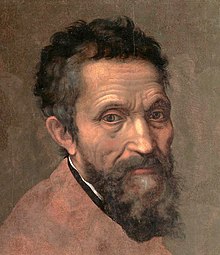
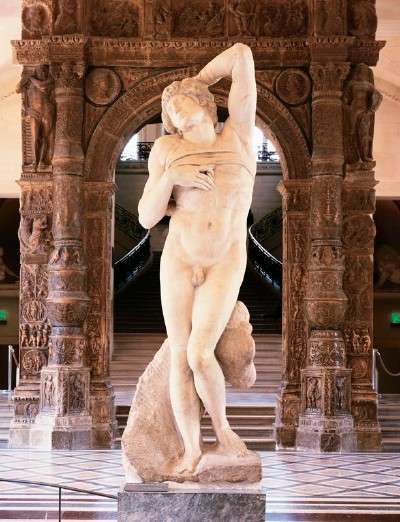
Michelangelo
Michelangelo di Lodovico Buonarroti Simon
known best as simply Michelangelo
(6 March 1475 – 18 February 1564)
To his final day, Michelangelo tried to live up to his life motto:
the greatest danger, he said, “is not that we aim too high and miss it, but hat we aim too low and reach it”
-A Pilgrimage to Eternity (TImothy Egan)
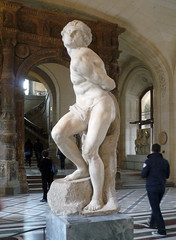
The Dying Slave and The Rebellious Slave were seized during the French Revolution and entering The Louvre in 1794
History of Paris
In our warped tourist minds, the History of Paris can be extracted from the History of le Louvre
Antiquty: The Ancient Past, especially before the Middle Ages
Classical Antiquity: Between the 8th century BC and the 6th century AD (centered on the Greco-Roman World)
Middle Ages: European History between the fall of the Roman Empire in the West (5th century) to the fall of Constantinople (1453)
Rennaisance: Marks the transition from the Middle Ages to modernity and covering the 15th and 16th centuries
Francis I of France, who sought to create a gallery of art in his château at Fontainebleau rivaling those of the great Italian palaces. He acquired masterpieces by leading Italian masters (Michelangelo, Raphael) and invited Italian artists to his court (Leonardo da Vinci, Rosso, and Primaticcio)
Louis XIV’s purchase of the collections of the banker Jabach
Louis XIV also expanded the collection of Italian paintings also Spanish paintings (by Murillo) and a series of French works (Le Sueur)
Early Modern Time: (1600-1850)
Works from the Northern schools appeared first during the 17th century and, above all, the 18th
Throughout the 19th century, confiscated French aristocratic collections and the spoils of the Napoleonic conquests brought important new acquisitions
Throughout the 19th century, confiscated French aristocratic collections and the spoils of the Napoleonic conquests brought important new acquisitions
The Modern Time Period: 1850-Present
With the opening of the Musée d’Orsay in 1986, the collection was split up, with works painted after the 1848 Revolution (including pictures by Courbet and the Impressionists) transferred from the Louvre to the newly renovated Gare d’Orsay.
Musée National d’Art Moderne completed in 1977 in the Centre Pompidou is the largest museum for modern art in Europe
Timeline (Wikiwand)
King and Queens of Paris
Monarchs ruled the Kingdom of France from the establishment of Francia in 509 to 1870, except for certain periods from 1792 to 1852.
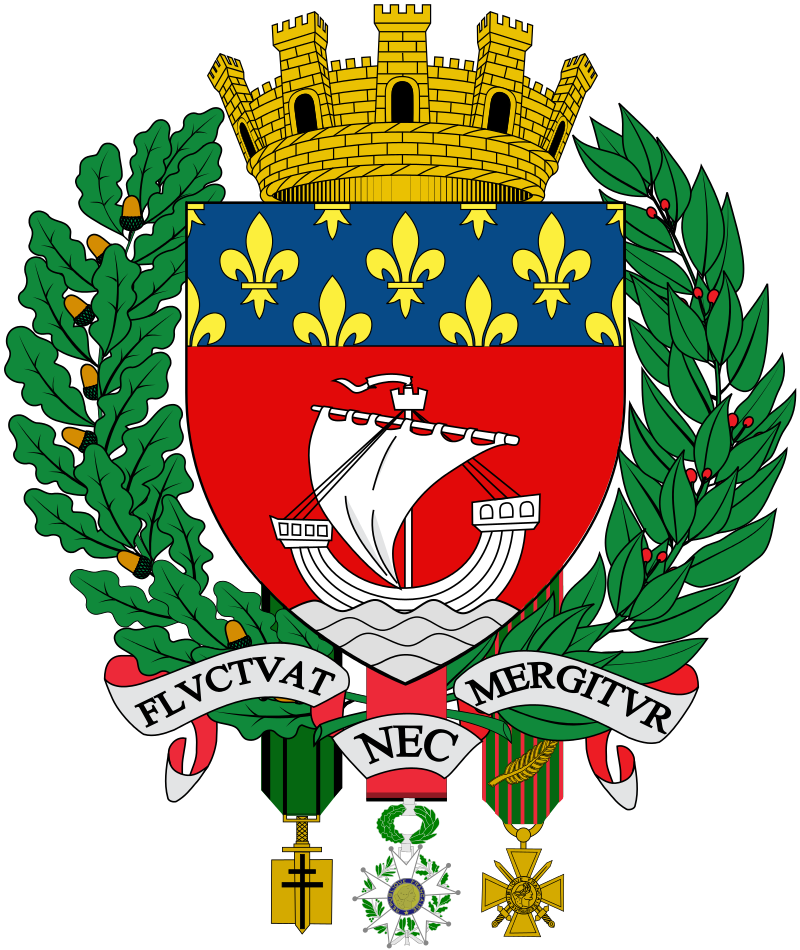
“[She] is tossed [by the waves], but does not sink”
(Fluctuat nec mergitur)
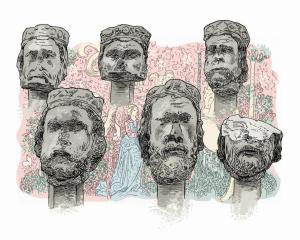
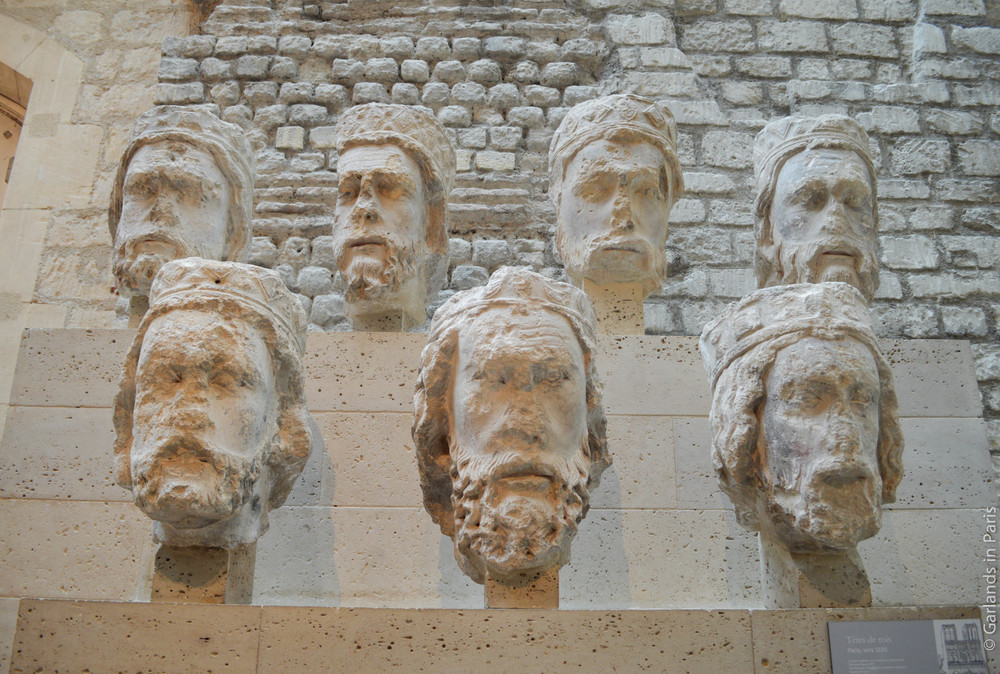
Severed Heads of Kings (Musée de Cluny)
We obviously love Paris, the culture and history
Of special interest is its restoration
Before Victor Hugo authored the Hunchback of Notre Dame the cathedral was not the Jewel in the Crown of Paris
Before the Louvre Pyramid (1989) there was a Parking Lot, before the parking lot – a fascinating history
Before the Boulevards of Paris, Baron Haussmann seriously remodeled Paris (and moved lots of people out) this during the second-half of the 19th century
Eugène Viollet-le-Duc restored much of Paris, especially the damage incurred during the French Revolution
(many objects and statutes, even the Bells of Notre Dame were melted-down for ammunition)
After decapitating Marie Antoinette, Parisians “defaced” and knocked-off-the-heads of some statutes “Kings” above the portals of Notre Dame
(as it turns-out, these were not the Kings of Paris, but the Kings of Judea)
The cathedral was eventually restored and the heads replaced.
The original “heads” (eventually found in a 1970s landfill) currently reside in the Musée de Cluny known as the “Musée national du Moyen Âge – Thermes et hôtel de Cluny”
(National Museum of the Middle Ages – Cluny thermal baths and mansion)
https://www.musee-moyenage.fr/collection/oeuvre/tetes-rois-juda-notre-dame.html
https://www.google.com/search?client=firefox-b-1-d&q=severed+heads+notre+dame+paris
https://www.imaginibus.com/blog/the-severed-heads-of-notre-dame
Eugène Viollet-le-Duc
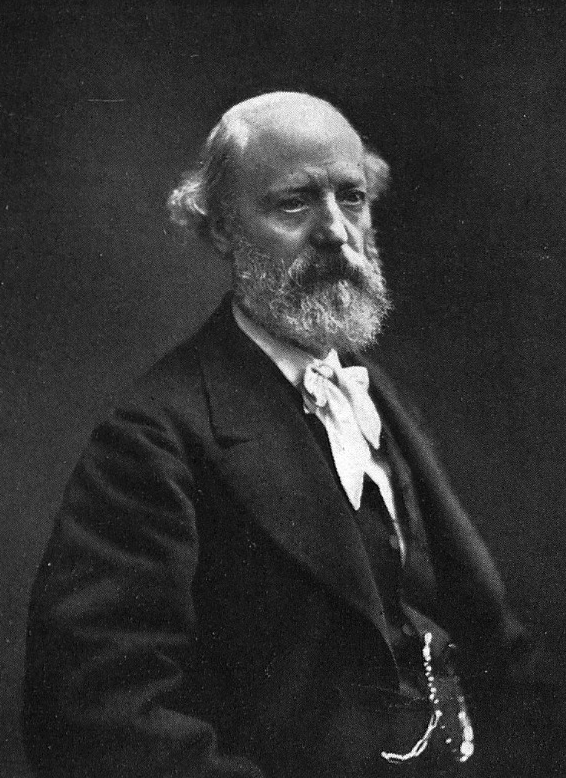
French Architect who restored medieval landmarks including those damaged by the French Revolution
His critics accuse him of implementing a Gothic style in-place-of of strict historical accuracy
(the abundance of gothic gargoyles, chimeras, fleurons, and pinnacles)
He influenced a new generation of architects including
-Louis Sullivan (Chicago)
-Antoni Gaudí (Barcelona)
-Victor Horta (Art Nouveau Founder)
The Restoration Argument: Respecting Viollet-Le-Duc at Notre-Dame
https://www.google.com/search?client=firefox-b-1-d&q=Eugène+Viollet-le-Duc
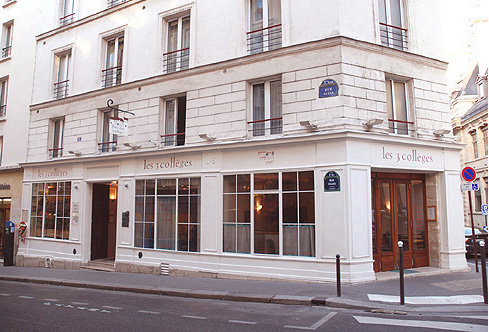
Hôtel des 3 Collèges

It is here that Gabriel García Márquez wrote No One Writes to the Colonel
a collection of short stories (between 1956 and 1957 while living in Paris)
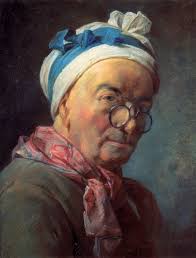
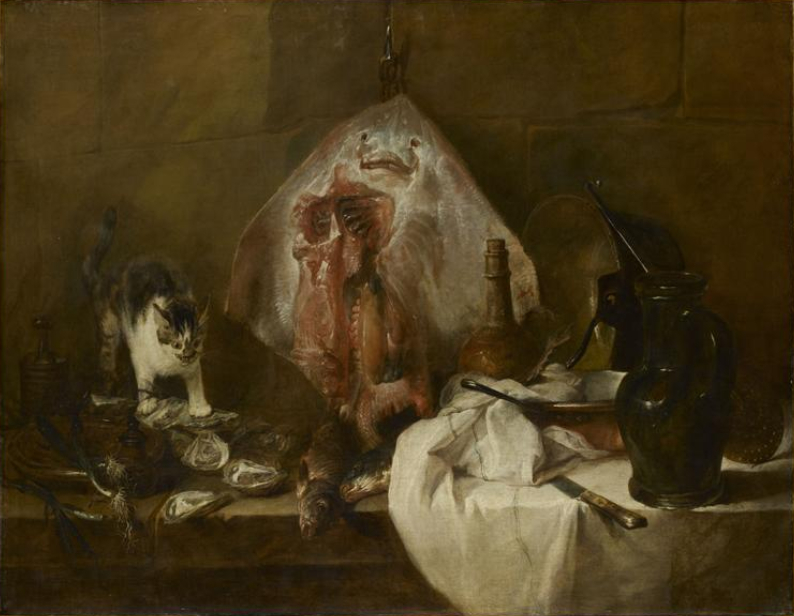
The Ray (Chardin)
The Ray
dit autrefois (French: La raie)
Sully
2 e étage
The painters of Louis XV
Salle 919
Jean-Siméon CHARDIN
Paris, 1699 – Paris, 1779
Jambon-beurre
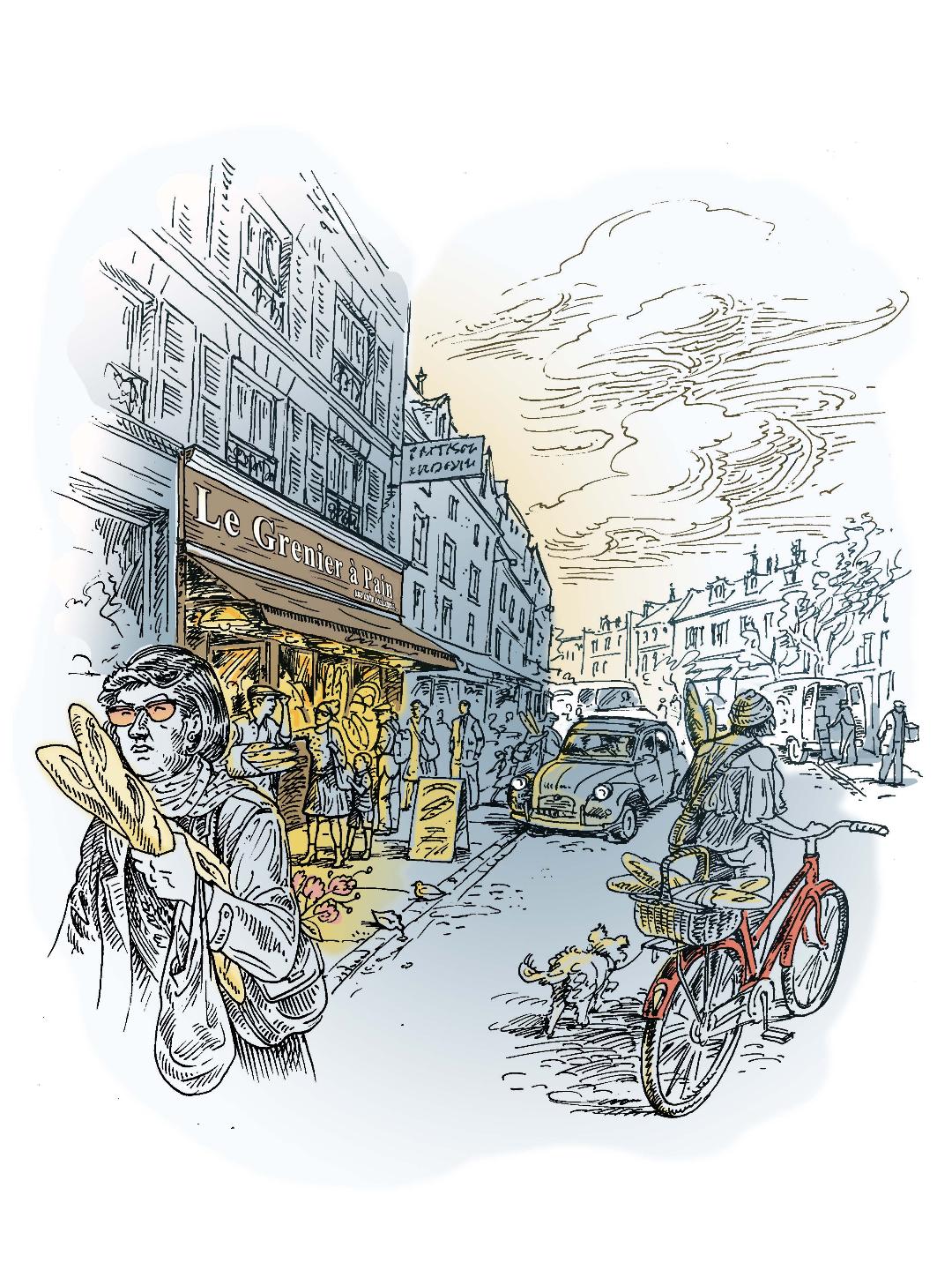
It was time for something good to eat, as I passed an artisan boulangarie with good activity
I ordered “ham-on-bear” and the cashier laughed at me
(I pointed to the sign)
He said “zhahm-bone-buuu(rr)” and threatened to charge me 5 euro for a French Lesson
(at this point it was too late to add mustard and a pickle)
(Ham and butter on baguette)
On the 2018 BBC series, Remarkable Places to Eat, they feature a Sandwich Shop in Paris
It serves Jambon Beurre, a classic simple French sandwich of Ham with Butter on a Baguette, perhaps with cornichons.
The show reveals how they obtain the best ham, the best baguette, the best butter – how the proprietors come from upscale business careers to focus on this simple, but outstanding shop.
So yesterday in Chicago, I ordered “The Parisian,” a Jambon Beurre at La Boulangerie, next to Lycée Français de Chicago -a private French international school (so it must be good, right?). When I ordered sandwiches for a Cubs game last year, my baseball buddy (a very picky sandwich eater) said “too much bread.” I forgot how slow they are at putting the order together.
This is not going to be a good review. I sat on the curb to eat my Jambon Beurre, lots of bread in relation to the ham. The baguette looked like a baguette, but was soft and chewy. The square of ham was shiny and not very generous, very unremarkable.

Several weeks before, I bought some sandwiches at Marianos supermarket, choosing the marked-down items approaching expiration. I ordered four sandwiches, and didn’t remember the contents of my fourth sandwich until I ate it. It was ham and it was delicious. But it was Great Ham, not a shiny thin square, but hand sliced pieces of ham which was so memorable.
A Ham Sandwich can be great. Paris has an abundance of Ham (maybe Ham & Cheese, and mustard)
My favorite Jambon Beurre was in St. Dennis (before I knew this sandwich was called a “Jambon Beurre”) This is not a touristy part of Paris despite the presence of the Basilica Cathedral of Saint Denis. My lunch options were limited, I walked into a nondescript shop, very plain (industrial cafeteria/butcher shop motif) I remember it was so plain, the menu was limited so I ordered a ham sandwich. The ladies were so nice as I requested mustard in my barely passable french. But the sandwich . . . . was REALLY GOOD! (“Très Bon”)
The Louvre (James Gardner)
The Many Lives of the World’s Most Famous Museum
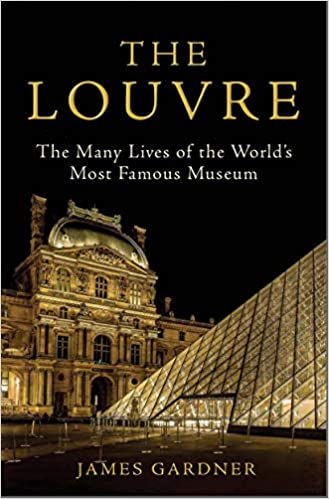
I bought the Kindle and Audible Book
EVENTUALLY even purchased the Hard Cover Paper Book
So that I could reference specific passages (you really can’t do that on the kindle)
Interesting Revelations
Napoleon Suite was never occupied by Napoleon III
The different ways that pieces of art were acquired
Major changes at the Louvre in our lifetimes
The evolution of the Couer Napoleon
The Louvre as a Studio
The Louvre as a Hotel
The Louvre as a Palace
You might need to be a Louvre Nerd to appreciate this book, but for me it is a GREAT reference
(some times I play the audio book when I go to bed – I will wake to hear a story of live-in artists at the Louvre becoming a problem because they would do-their-dirt in the Grande Galerie)
 Paris for the Holidays